Wedding Videographer vs. Content Creator: What’s the Difference?

Guides
Wedding content creator or videographer: what's the difference?
You've seen wedding Reels landing on Instagram the morning after the party. You've also watched wedding films that feel more like short pieces of cinema, complete with vows, voices and a story that unfolds over several minutes. Both are videos of a wedding, but they're usually made for different reasons.
To decide which service you need, compare the files you will receive, how sound is recorded and when the work will be delivered. We explain the usual differences between content creation and wedding filmmaking, while allowing for the fact that some professionals offer both.
What does a wedding content creator do?
A wedding content creator captures short-form photographs and videos designed to be viewed and shared quickly, often on Instagram or TikTok. They typically work with a smartphone or a lightweight camera, filming vertical clips, behind-the-scenes moments, small reactions and the parts of the day you might not have seen yourself.
Depending on the package, you may receive the original clips, Stories, Reels or a selection of short edits. Some suppliers offer delivery within a day or two, which can suit couples who want to share material soon after the wedding. Confirm that timing and the exact files included with the person you are considering.
But not every content creator works in the same way. Ask what equipment they use, which edits are included, whether you receive the original clips and how quickly the files will be delivered.
What does a wedding videographer create?
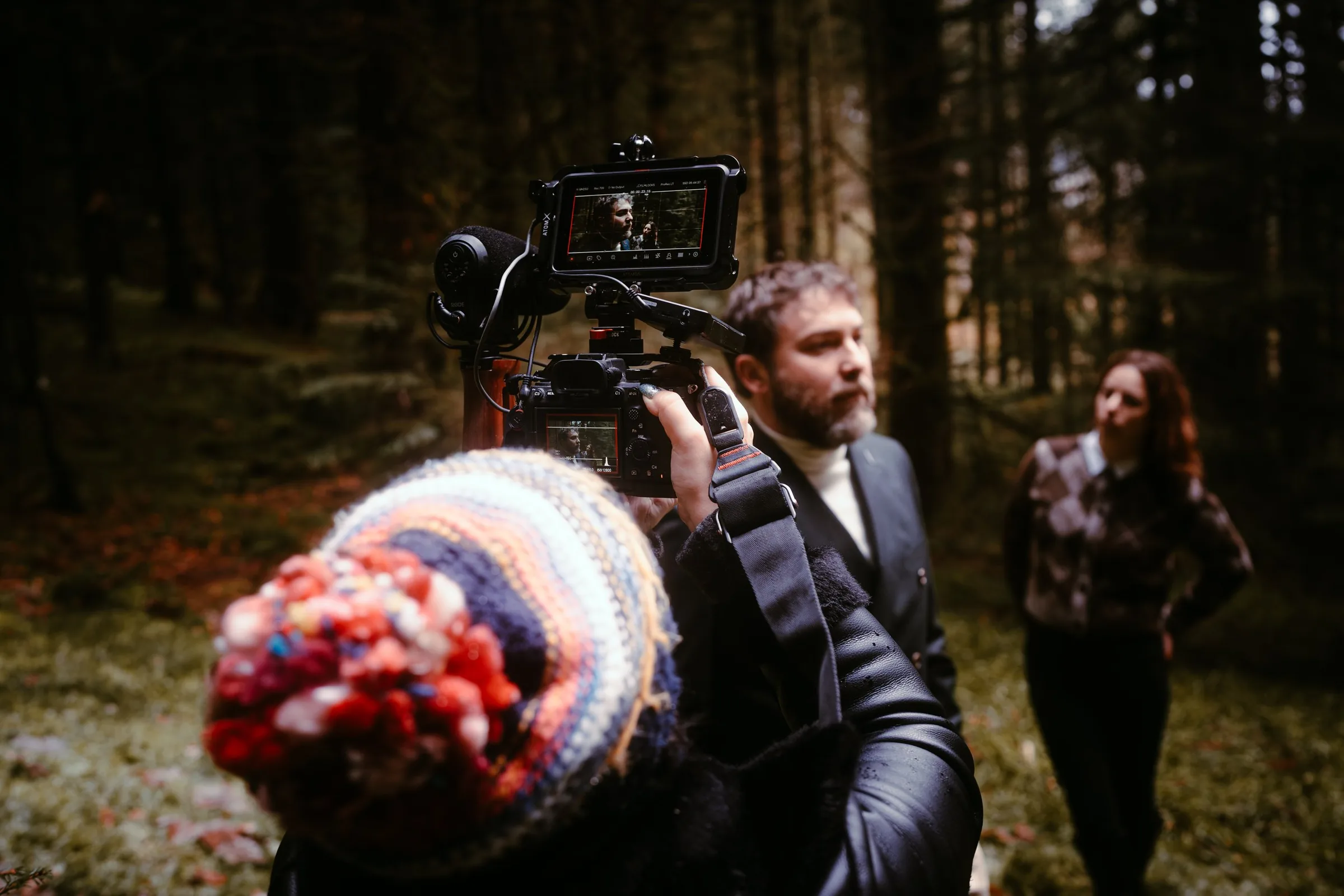
A wedding videographer or filmmaker records moving images and sound to create one or more finished films. That can involve filming continuous parts of the ceremony, recording speeches with separate microphones and gathering scenes that will be combined in the edit. Ask to see complete examples, because the formats and recording methods vary between filmmakers.
After the wedding comes the editing, which can include selecting footage, constructing the narrative, sound design, music and colour grading. The finished film might be short, long, documentary or cinematic. It's the creative process and the result, rather than a fixed length, that make the difference.
Some filmmakers also offer trailers or vertical versions for social media. Those are separate deliverables worth checking before you book, rather than something to assume every film package includes.
What will actually look different when you receive the videos?
A content-creation package often focuses on clips or short edits for quick viewing and sharing, while a wedding film is usually edited to be watched as a complete piece. The services can overlap, so check the actual examples and inclusions. A Reel of the ceremony, for instance, does not necessarily include a recording of the full vows.
Sound is one of the most useful things to ask about. A smartphone can capture the atmosphere, but if you want to preserve the words spoken at a ceremony or during speeches, find out how they're being recorded. Dedicated microphones, backup audio and careful mixing may be part of one supplier's process and not another's.
Does faster delivery mean lower quality?
Delivery speed depends on the work included and the supplier's process. A selection of clips may be ready quickly, while an edit that combines several cameras, separate sound recordings and colour work may take longer. Neither a short turnaround nor a long wait establishes the quality of the finished work on its own.
Ask when you will receive each part of the package, including original clips, edited Reels, the main film or any complete ceremony recording. Compare those dates alongside the type and amount of work included, so that you know which files will be available for early sharing and which will follow later.
Do you need both a content creator and a videographer?
Not necessarily. If your priority is a completed wedding film, you may not need a separate content creator. If you'd also love a steady stream of vertical clips to share with friends, the two services can complement each other. Some film teams offer social edits as part of their work, too.
When you hire both, introduce them before the day. They need to plan their positions during the ceremony and speeches, avoid blocking one another's cameras and make sure you're not being asked to repeat the same scene for three different people. Our guide to working with a wedding photo and film team covers the same principle.
Agree in advance whether anything may be posted during the wedding or whether you want to review the content first. Also discuss how guests will be informed and how requests not to appear publicly will be handled. A supplier delivering files privately to you is providing a different service from one publishing on your behalf.
What should you ask before booking?
Ask to see a complete example of what the supplier delivers, not only their best clip. Find out how many videos are included, whether they're vertical or horizontal, if raw files are supplied, how sound is handled and when you'll receive each edit. Clarify whether publishing is part of the service or whether the content is delivered privately to you.
To understand the filmmaking side in more detail, read our guides on wedding videographer costs and choosing a filmmaker.
Choose the films and clips you want to receive
Begin with how you want to watch and use the recordings: you may want short clips for sharing, a complete wedding film, full speeches or a combination. Compare suppliers against those requirements, including sound, delivery dates and publication arrangements. If you book more than one person, introduce them before the day so they can coordinate their coverage.
At The Wild Strawberry, we make films that bring documentary storytelling and cinema together. You can explore our wedding films to see what that looks like.